







TOOLS
Login to access your documents and resources.
At-a-glance
| Target Sectors: |
|
| Tarket Markets: |
|
Overview
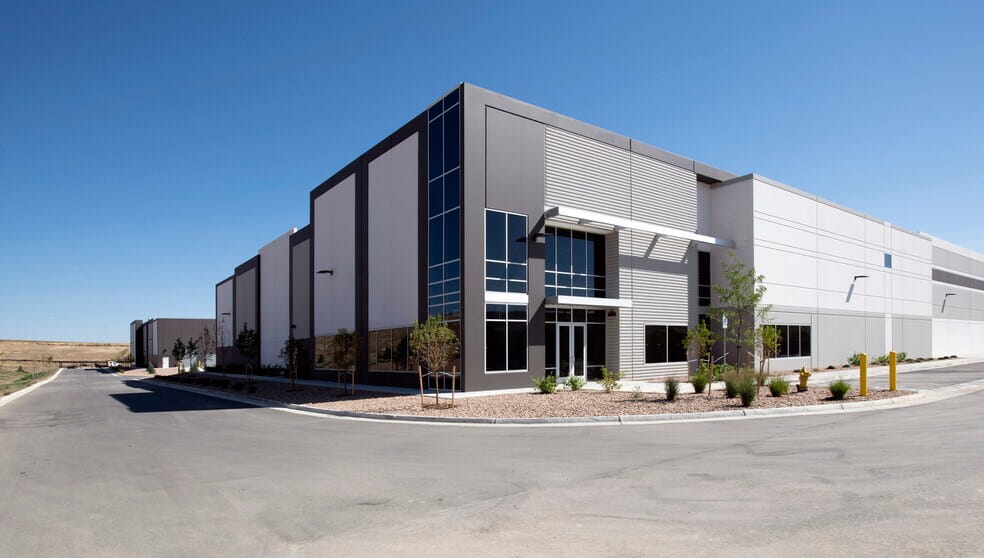
Sector-specific strategy focused on investing in institutional quality industrial assets in resilient U.S. cities with a strategic emphasis on ‘Sun Belt’ markets. The strategy focuses on ‘future-proof’ cities seeking to deliver recurring, durable cash flow through cycles by implementing a research-driven investment thesis incorporating light industrial, bulk distribution and cold storage industrial sub-sectors.
Why Nuveen for U.S. Cities Industrial?
MARKET OPPORTUNITY
Strategically concentrating on investments that are closest to consumers and in markets with strong fundamental growth opportunities
STRUCTURAL TAILWINDS
Capitalizing upon secular trends in e-commerce and urbanization driving sustained demand and industrial rent growth within the supply chain
EXPERIENCED TEAM
Cycle-tested industrial professionals, averaging over 20 years of experience, positioned to offer deep industry and sector insights.
Explore more real estate investment solutions
Meet the team

Insights & news

Webinar replay: Europe’s value-add moment
Watch Nuveen Real Estate’s experts explore why Europe's steep repricing may signal the best entry point since the global financial crisis and how disciplined, value-add investing is capturing the opportunity
Mike Sales
,
David Pearce
,
Stefano Rubini
| 26 Mar 2026


1 Graydon serves as an independent contractor and senior advisor to Nuveen and is not an employee of Nuveen or any of its affiliates.
Real estate investments are subject to various risks associated with ownership of real estate-related assets, including fluctuations in property values, higher expenses or lower income than expected, potential environmental problems and liability, and risks related to leasing of properties.
Important information on risk
Past performance is no guarantee of future results. All investments carry a certain degree of risk, including the possible loss of principal, and there is no assurance that an investment will provide positive performance over any period of time. Certain products and services may not be available to all entities or persons. There is no guarantee that investment objectives will be achieved. See the applicable product literature for details.
Investors should be aware that alternative investments are speculative, subject to substantial risks including the risks associated with limited liquidity, the potential use of leverage, potential short sales, currency exchange rates, and concentrated investments and may involve complex tax structures and investment strategies. Alternative investments may be illiquid, there may be no liquid secondary market or ready purchasers for such securities, they may not be required to provide periodic pricing or valuation information to investors, there may be delays in distributing tax information to investors, they are not subject to the same regulatory requirements as other types of pooled investment vehicles, and they may be subject to high fees and expenses, which will reduce profits.
As an asset class, real estate-related assets are less developed, more illiquid, and less transparent compared to traditional asset classes. Real estate investments are subject to various risks, including but not limited to, fluctuations in property values, higher expenses or lower income than expected, changes in economic conditions, currency values, environmental problems and liability, the cost of and ability to obtain insurance, and risks related to leasing of properties.
